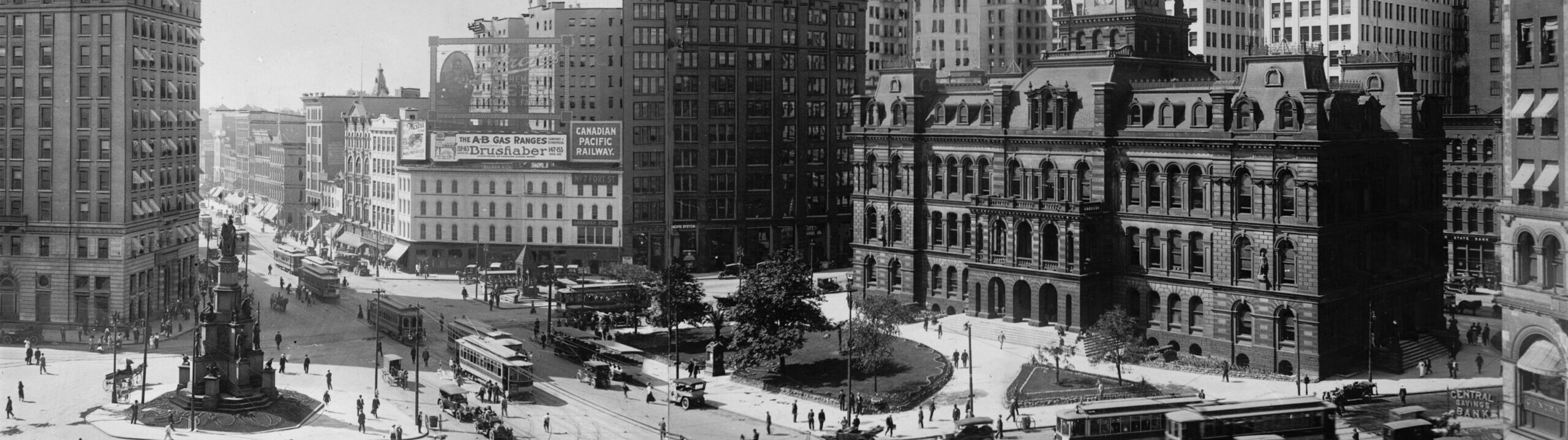
America has long struggled to reconcile, or even recognize, many racial issues from its history, the residual effects of de-facto segregation being one of them. To this day, Detroit remains one of the most segregated cities in the US, and in order to learn how this injustice came to be, one must examine the city’s history of race relations and racial tension.
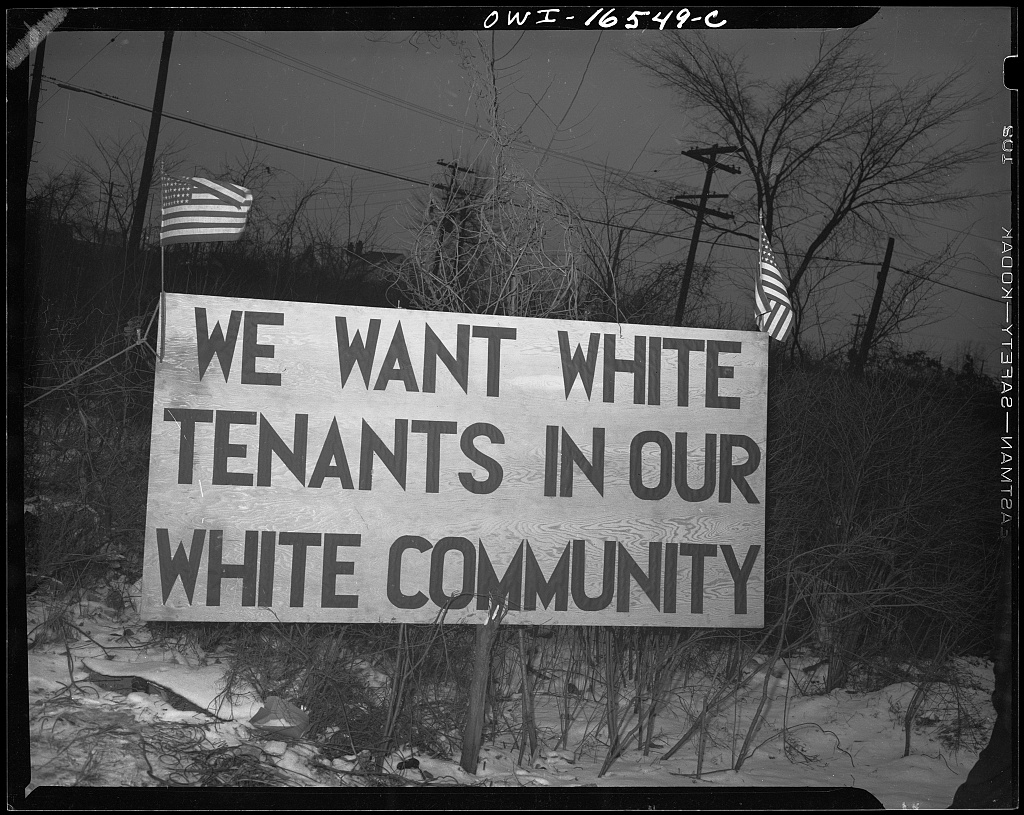
The Sojourner Truth Housing Project is one of many cases to consider in answering this question. The development, named after Abolitionist Sojourner Truth, was planned to help black workers and their families who struggled to find housing during the massive war effort occurring in Detroit. The development was part of the effort by the Federal Housing Authority and its various sub agencies to provide low income families with affordable housing in the wake of the Great Depression and the Second World War.1 Problems with the development arose when disgruntled white citizens discovered the plan for the federally funded development and protested publicly that it was “socialism” and a “threat to their white community.”23 As a result, the Housing Commission temporarily retracted the offer to the black community, and announced it would instead be utilized to house white families.3 However, these attempts to prohibit black tenants by the Housing Commission were met with even more backlash from the black families themselves who were slated to move into Sojourner Truth, as well as the larger black community within Detroit and their allies.43
Despite the large outcry from a small vocal minority of racists lurking in Detroit, much of the community rallied to win Sojourner Truth back for its original inhabitants. As a result, Riots ensued at Sojourner Truth, as segregationist protestors were met by counter protestors, and the National Guard was called to help protect black families move into their new homes.5 Many involved in the riot were beaten and arrested by police, but at least 24 black residents of Sojourn Truth were later released by an order from Judge George Murphy, after he ruled the residents were defending their homes from whites who were disturbing the peace and practicing illegal picketing.5
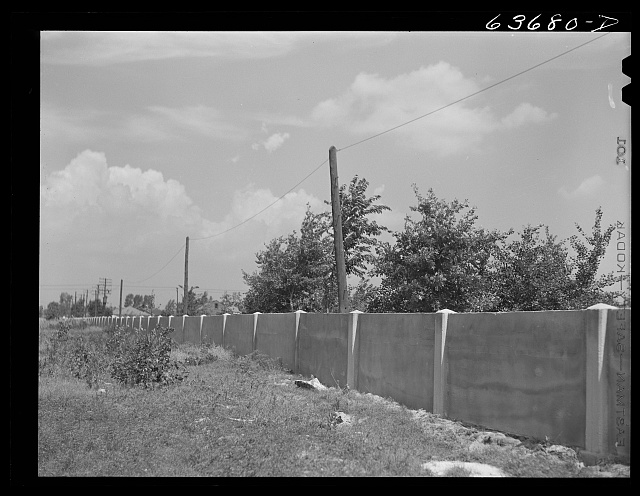
The now historic development of Sojourn Truth still remains in Detroit, housing families 80 years after their construction and the riots which attempted to prevent their intended purpose. Sojourn Truth was only one of many federally funded, locally constructed, developments across the US during the early years of World War II, yet it received such high controversy that the initial violence led to more race riots in the following year—even garnering the attention and action of President FDR, who instigated Martial Law in Detroit to ensure production of wartime commodities continued.6 Why did Detroit encounter so much racial tension during a time when America should have been uniting in their war effort as the Arsenal of Democracy? Sarah Frohardt-Lane contends that racial tensions in Detroit largely arose due to lack of understanding of one another’s culture from lack of interaction as a result of de-facto segregation.7 Frohardt-Lane continues, questioning if it was the case that workplaces and neighborhoods were subject to de-facto segregation, where was the opportunity to build a community of understanding? Detroit’s current landscape remains marred by its history of segregation, with towering concrete walls and FHA neighborhoods persisting as painful reminders of the hate which helped shape the city.8
Bibliography
Primary
Vachon, John. “Concrete Wall, One Half Mile Long, Detroit, Michigan. This Wall Was Erected in August 1941 to Separate the Negro Section from a New Suburban Housing Development for Whites.” Still image, 1941. Michigan–Wayne County–Detroit. https://www.loc.gov/pictures/resource/fsa.8c20122.
Library of Congress, Washington, D.C. 20540 USA. “Detroit, Michigan. Riot at the Sojourner Truth Homes, a New U.Sn Federal Housing Project, Caused by White Neighbors’ Attempt to Prevent Negro Tenants from Moving in. Sign with American Flag ‘We Want White Tenants in Our White Community,’ Directly Opposite the Housing Project.” Image. Accessed September 15, 2022. https://www.loc.gov/resource/fsa.8d13572/.
Author of subarticle N/A “FDR’s Proclamation Orders End of Rioting“ The Daily Monitor Leader. June 22, 1943. [Volume] (Mount Clemens, Mich.) 1942-??, June 22, 1943, Image/page 1, 3 https://chroniclingamerica.loc.gov/lccn/sn96077289/1943-06-22/ed-1/seq-1/.
Wood, John. “Citizens committed to continue the fight for homes.” The Michigan Chronicle. January 31, 1942 [Volume] (Detroit, Mich.) 1936-Current, January 31, 1942, CITY EDITION, Image/page 1, 2
Wood, John. “Dorais Defies U.S.; Takes Slap at Negroes.” The Michigan Chronicle. February 21, 1942. (Detroit, Mich.) 1936-Current, February 21, 1942, CITY EDITION, Image/page 1, 2 https://chroniclingamerica.loc.gov/lccn/sn83045324/1942-02-21/ed-1/seq-1/.
Chism, Larry. “Judge frees negroes held for rioting.” The Michigan Chronicle. March 7, 1942. [Volume] (Detroit, Mich.) 1936-Current, March 07, 1942, CITY EDITION, Image/page 1, 14 https://chroniclingamerica.loc.gov/lccn/sn83045324/1942-03-07/ed-1/seq-1/.
Secondary
Frohardt-Lane, Sarah. “Close Encounters: Interracial Contact and Conflict on Detroit’s Public Transit in World War II.” Journal of Transport History 33, no. 2 (December 2012): 212–27. https://doi.org/10.7227/TJTH.33.2.4.
Weintraub, Ruth G., and Rosalind Tough. “Federal Housing and World War II.” The Journal of Land & Public Utility Economics 18, no. 2 (1942): 155–62. https://doi.org/10.2307/3158861.
- Weintraub, Ruth G., and Rosalind Tough. “Federal Housing and World War II.” The Journal of Land & Public Utility Economics 18, no. 2 (1942): 155–62. https://doi.org/10.2307/3158861. [↩]
- “Detroit, Michigan. Riot at the Sojourner Truth Homes, a New U.Sn Federal Housing Project, Caused by White Neighbors’ Attempt to Prevent Negro Tenants from Moving in. Sign with American Flag ‘We Want White Tenants in Our White Community,’ Directly Opposite the Housing Project.” [↩]
- Wood, The Michigan Chronicle. (Detroit, Mich.) 1936-Current, January 31, 1942, CITY EDITION, Image/page 1-2. [↩] [↩] [↩]
- Wood, The Michigan Chronicle. (Detroit, Mich.) 1936-Current, February 21, 1942, CITY EDITION, Image/page 1-2. [↩]
- Chism, The Michigan Chronicle. (Detroit, Mich.) 1936-Current, March 07, 1942, CITY EDITION, Image/page 1, 2, 14. [↩] [↩]
- The Daily Monitor Leader. (Mount Clemens, Mich.) 1942-19? [↩]
- Frohardt-Lane, “Close Encounters.” pp. 212-227 [↩]
- Vachon, “Concrete Wall, One Half Mile Long, Detroit, Michigan. This Wall Was Erected in August 1941 to Separate the Negro Section from a New Suburban Housing Development for Whites.” [↩]

I came across your site wanting to learn more and you did not disappoint. Keep up the terrific work, and just so you know, I have bookmarked your page to stay in the loop of your future posts. Have a wonderful day!